Tag Archives: family

The Numbers Man: How Mathematical Thinking and Military Service Shaped Our Family’s Success

I wrote this life story for my dad before his 93rd birthday in October 2025. I gave him a choice of three headlines. On his birthday, he chose that one (above). He died 12 days later.
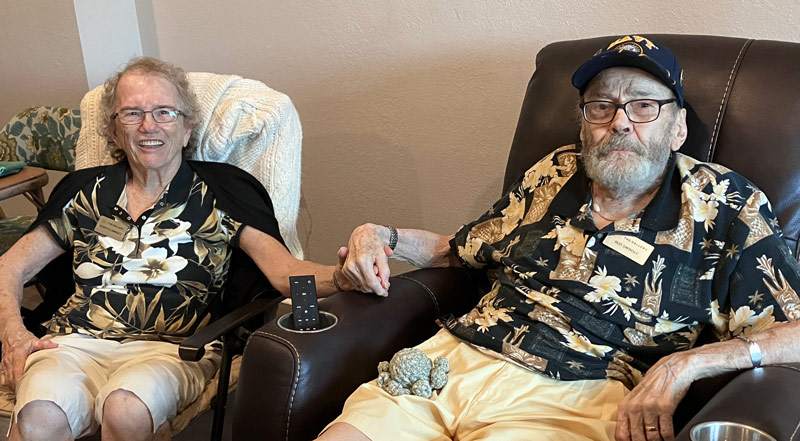
Roberta & Bud Swingle, 2025, in assisted living in Florida

Clarence E. Swingle, Jr., known as Bud, grew up in small bedroom with a sloped ceiling, no closet, and no room for a dresser, so he was allocated one drawer in his sister’s bedroom. A challenging time in his childhood was having to give up his collie dog, Snooks, to a friend’s home, when Bud’s family moved from Ulster, New York, to Sayre, Pennsylvania, which made him so sad that he never wanted a pet again. He graduated from Sayre High in 1950. 

A combination of family support, military service and the GI bill, self-advocacy, a mathematical mind, and hard work enabled him to build a comfortable life for himself and his eventual family.

His older sister, June, managed to enroll in nursing training. There wasn’t money for Bud to go to college, so his father, Clarence E. Swingle, Sr., got him a job as an office boy delivering mail among departments at Ingersoll Rand in Athens, Pennsylvania. Ingersoll Rand was also where Bud’s mother, C. Mildred Swingle, worked during World War II, operating a machine. She had started in the workforce as a teen, forced to leave high school as a sophomore to go to work after her father died.

Bud was also a hard worker. “They allowed me to work 9 hours a day, 5 days a week, and then 5 hours on Saturday,” he told his daughter by email in 2020 when she asked about his first job. “My pay was 80 cents an hour before taxes with no overtime pay, so my gross weekly pay was $40. I lived at home, so I was able to purchase a 1947 convertible Studebaker with payments in 1950. After a year, I requested a better paying job, and I ended up running a drill press at IR for $70 a week gross pay for a 40-hour week. I was really living now and still living at home.”

At age 20, facing being drafted, he enlisted in the U.S. Navy Air Force for four years, becoming an electronics technician radar/radioman on a Martin Marlin seaplane, part of squadron VP-48 from San Diego. They flew surveillance patrols off the coasts of Korea and China, out of Iwakuni, Japan, during and after the Korean War. One time, a patrol plane fired big guns at them, but missed, as they flew alongside taking pictures, an encounter written up in stateside newspapers.
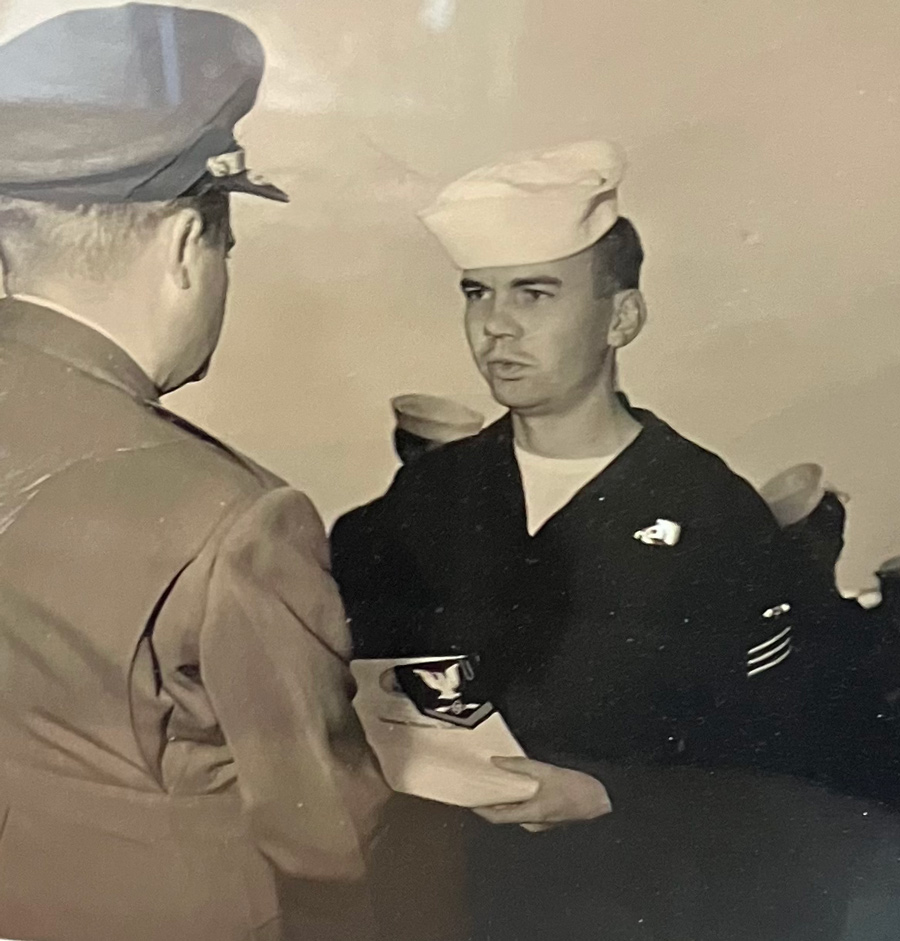
In the Navy

On their last flight in November 1956, they crashed during a night landing in Manila Bay in the Philippines due to pilot error. The plane sank in three pieces. Luckily the team survived.

Bud enrolled at Penn State in spring 1957, supported by the GI bill and his flight pay savings. He lived in a Quonset hut, surplus military housing that was needed to accommodate the post-war veteran enrollment surge. He graduated with his accounting degree in June 1960 and was hired at Eastman Kodak Co. in Rochester, NY. He asked to be a computer systems analyst, designing business computer systems, rather than their first offer of an accounting position. This was in the days when data and program instructions were entered on stiff paper punch cards. Through night classes at the University of Rochester over six years, he earned a master’s degree in business, while living in a mobile home park.

Thanks to his annual Kodak bonus, he was able to buy land on Keuka Lake in the 1960s, paid for over six years. He moved his mobile home there and rented a room in Rochester from a coworker, to be closer to Kodak during the workweek. 

He met his future wife, Roberta, at a St. Patrick’s Day dance in Rochester. He asked for her phone number but didn’t write it down, so she thought she’d never hear from him. But he’s long had a knack for remembering numbers, and he called. They were married on New Year’s Eve.
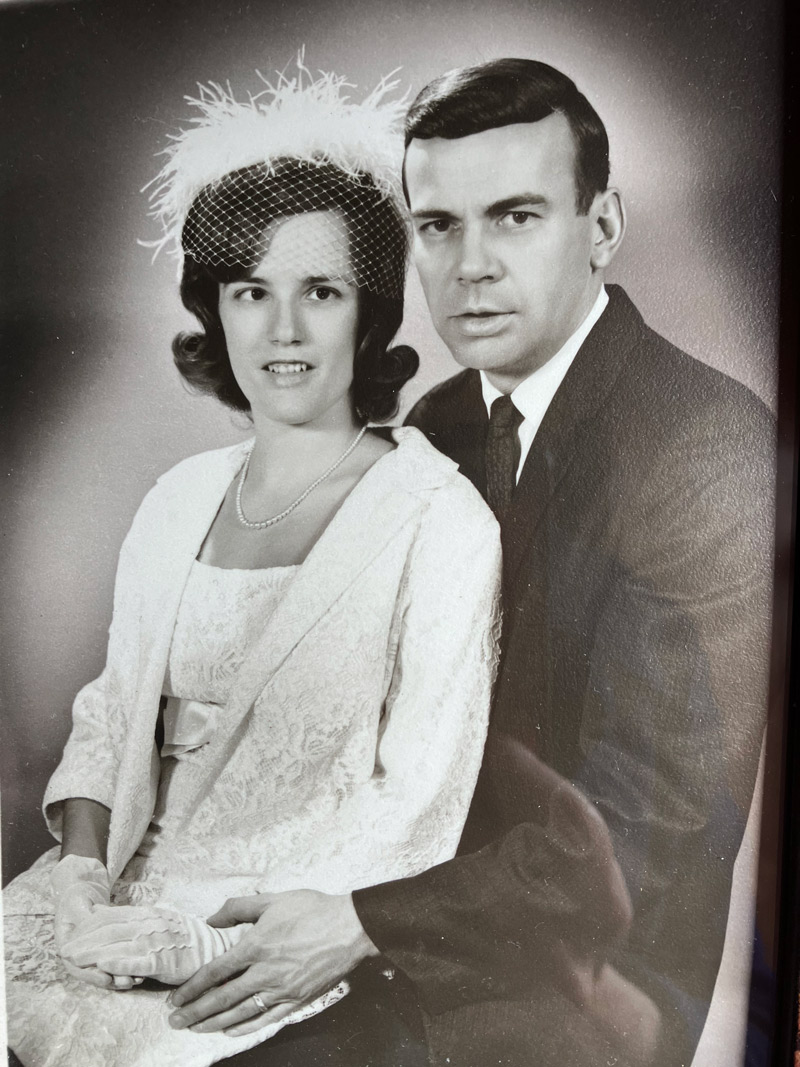
Wedding day

Their two children, Christine and Mark, grew up in Rochester and spent summers on Keuka Lake — with no TV and weekly trips to the Penn Yan town library. After high school, Bud and Roberta helped them go to college.
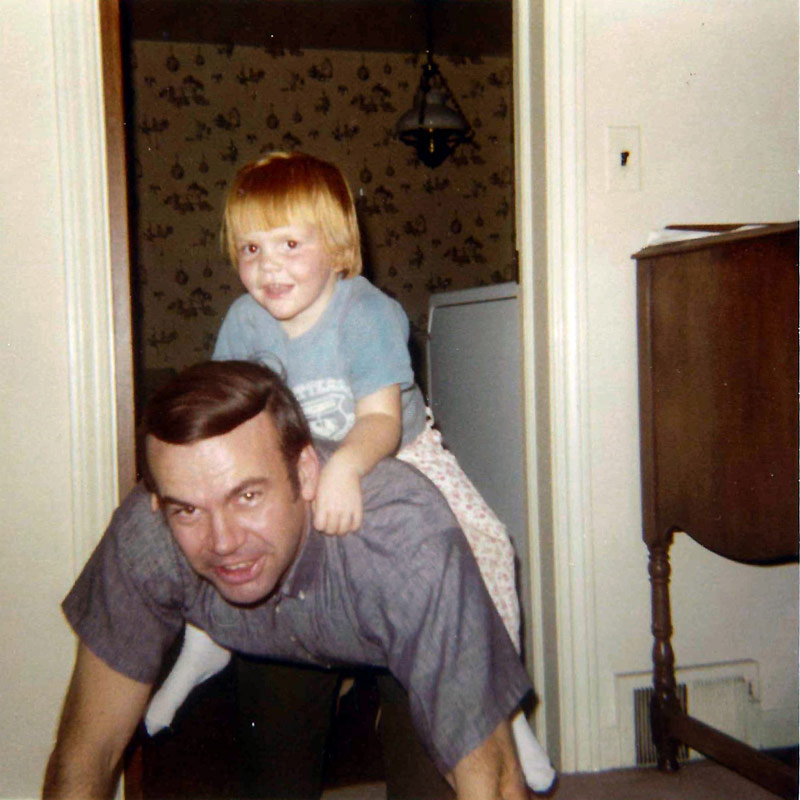
Horsey time with Chris

The family also had a mobile home in a senior community in North Port, Florida, where Bud’s parents spent four months each winter. Bud, Roberta, and the kids typically drove to Florida around Easter, including many 26-hour, straight-through drives south in a station wagon.

Bud’s father had long invested in stocks, and Bud did the same, which supported his retirement from Kodak in 1986 at age 54, as part of an early retirement incentive.

His family appreciates the many ways that Bud has been a good supporter of his family.

Chris with husband Tim, mom Roberta, son Mark, and Dad

Retirement has included taking care of his parents, who lived into their 80s and 90s, as well as enjoying cruises, playing bocce and bridge games, and dinners with friends. 
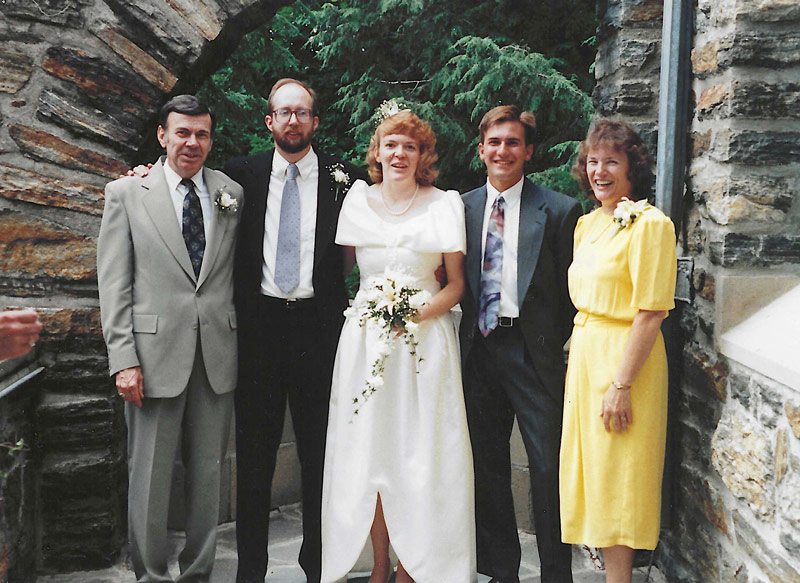
His daughter got married at Keuka Lake (above). For the wedding of his son, Bud returned to Japan, with his family (pictured below). 

Bud and Roberta have three grandchildren — two in Lawrence, New Jersey, and one in Brooklyn. 
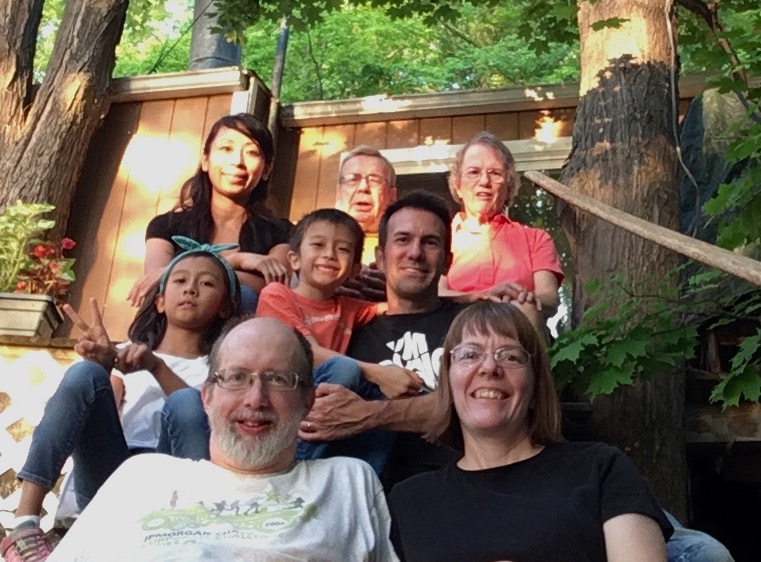
Yuki, Dad, Mom, Mia, Jion, Mark S., Tim, and Chris at Keuka Lake, 2017

These days, proudly wearing a Navy hat most days, he lives with his wife in North Port, FL.

Update: Dad died peacefully Oct. 19, 2025, at home, after 20 days of hospice support. He was 93.

He is survived by his wife, Roberta Swingle; his daughter, Christine Farnum (and spouse Timothy) and their son Mark Farnum; as well as his son, Mark Swingle (and spouse Yukiko) and their children Mia and Jion Swingle.

He chose cremation and did not want a service.

Cards may be sent to Roberta Swingle, 6801 Holo Court, North Port, FL 34287

1 Comment

Filed under Being grateful

What I learned from Mike

One thing I’ll remember about our friend Mike, who died suddenly in April, was the way he liked to joke around and have fun. He insisted to children that cantelopes “grew” in the lake and floated to the surface — look, there’s one now! — when they were ready to harvest.

One thing I’ll treasure about Mike was his example of how to include children in group gatherings, in ways that make clear that they’re valued and capable.

Image

Each summer, about 30 friends and relatives with ties to Rochester gather at Mike and Bob’s summer cottage in the Adirondacks. The weekends are intended to be a mix of work and play. Our hosts plan a list of home improvement projects, such as painting exterior walls, building sheds and leveling the cottage by adjusting piers underneath. There are typically some more questionable tasks, too, such as moving rocks around the property or “cleaning the forest,” which involves raking leaves and hauling away fallen branches.

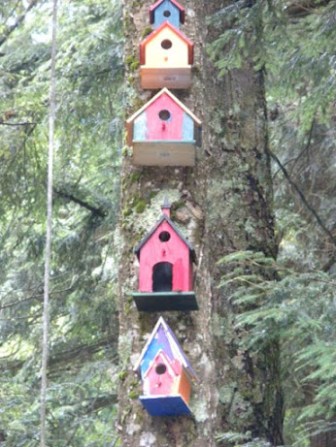
Mike always assigned each guest to a specific task, typically in teams of three to five people. He included every child, even those under age 5, on a team. One time, kids helped paint a shed. They might not last very long on the project. But they do their part. Last summer, the kids all painted birdhouses, where were then hung on a tree. (Photos above and below.)Image

Toward the end of each weekend, we gather to reflect – and joke – about “what we learned” that weekend. Kids are always included in those discussions, too. Their comments and insights are often a delight. I’m grateful for the wise example of treating each and every person as important, regardless of age. Mike was great at building community.

Over the past year or so, I’ve led multiple volunteer crews from my church at Foodlink, the regional food bank. Foodlink sets a minimum age of 8, and we’ve had volunteers from age 8 to close to 80. The task includes counting out dozens or even hundreds of cans, boxes or packets of food. We have to do math to calculate how many cases of each food item we’ll need to pack specific numbers of food bags.

Like Mike, I aim to include each volunteer equally and appreciate their contributions. It warms my heart to see kids rise to the challenge of the math calculations, counting, carrying and packing. When they need help, I’ve watched them team up with another child or adult to get the task done. Their new buddy might be someone they just met, and their shared task helps build community.

Image

Callan (holding bag) with other church volunteers at Foodlink

Callan, who’s 9, told me that the work makes him feel capable and useful: “I just helped a lot of kids get food that they needed,” he says. He also likes getting to know new people from our large congregation, and he shares a neat connection with them when they cross paths later at church.

Callan and his sister, 11-year-old Madi, are such fans of the volunteer work that they have recruited friends to join in.

Cheryl, mom of Callan and Madi, says the work gives her kids a boost of confidence.

Amen.

Rest in peace Mike Losinger.  April 10, 1941 – April 17, 2013

CIMG8789

Sunset at Mike & Bob’s cottage on Mountain Lake, Adirondacks, NY

1 Comment

Filed under Being grateful

Moments of delight

I’m grateful for the delight that small things can bring. Just in the past few days:

I’ve watched a butterfly flutter among purple flowers on my butterfly bush.

My family and I biked along Lake Ontario and enjoyed  beautiful sights. (Did you know that the bike path along the Lake Ontario State Parkway goes through nice wooded sections?) This pond is across from Durand Eastman Park.

Kids always bring a fresh perspective. I enjoyed seeing my nephew explore what happens when  you throw a rock into the lake. Plunk! (Where  did it go?)

I stop for farm stands. I love getting fresh fruits and vegetables right from the source. I love the simple stands with the hand-written price signs and an honor-system jar or box where you leave your money.

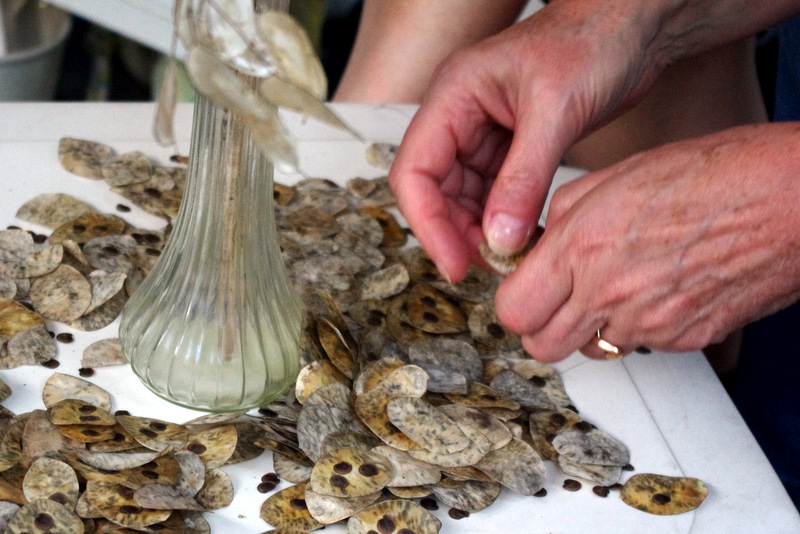
I hadn’t seen a silver dollar plant since my youth. But they appeared in my garden this year, probably planted by a bird. Last night, I was reminded how to slide the thin seed pod covers off to reveal the silvery circles.

How many of those round black seeds do you think two stalks of the plant contained? My son counted. I’ll let you guess. Then I’ll post the answer later. Prize offer: Closest guess without going over can have the seeds!

Photo: all of the seeds in a baby food jar.

Best delight of all: Carving out time to notice simple joys.

5 Comments

Filed under Being grateful

Millions of heartbeats per year

Put your hand over your heart.

Each beat that you feel requires tissue-paper-thin membranes to open and close. The heart valves regulate the flow of blood, millions of times per year. The movement of the valves creates the sound of the heartbeat.

But when a medical professional with a stethoscope to your chest hears an extra sound – a lingering noise like the sound of scraping your fingernails along a tablecloth, rather than the distinct lub-dub sound – you have a heart murmur.

My mom’s murmur was caused by a leaky mitral valve, which separates the upper and lower left chambers of the heart. This inflow valve has two flaps that open to let blood flow into the heart’s main pumping chamber, the left ventricle. Then the valve is supposed to close to keep blood from leaking backward when that lower ventricle squeezes the oxygenated blood out to the whole body.

(You can hear the sound of so-called Acute Mitral Regurgitation here, courtesy of the University of Michigan Medical School. Listen to the fourth one on the page: http://www.med.umich.edu/lrc/psb/heartsounds/index.htm)

Some people with a defective valve feel fatigue, exhaustion, lightheadedness, heart palpitations, shortness of breath or have a cough (especially when lying  down). My mom didn’t have any clear symptoms. But leaky mitral valves tend to get worse. Over time, echocardiograms showed that her leak had become significant. Untreated, the valve problem could cause heart failure or serious heart rhythm problems.

It’s scary to face open-heart surgery, to know you’ll be put to sleep, your chest sliced open, your ribs broken, your heart intentionally stopped and sliced into. It’s hard to believe that a heart-lung machine can keep your blood flowing while the surgeon and team do exacting work with Gore-Tex suture – the same kind of material as in specialized outdoor clothing. This form of “expanded” Teflon has tiny pores that allow human tissue to grow into it without forming scar tissue.

People asked who was doing my mom’s surgery. “Oh, he’s good,” they said. One physician from a different specialty at the same hospital added, “They’re all good. They’re like God on earth.”

I’ve interviewed surgeons and other medical professionals over years of writing about health as a journalist. This week I’m newly appreciative of their skill and care.

I’m grateful for successful surgery yesterday and good hospital care. I was so glad to be able to see my Mom walk a lap – slowly, gripping a walker — around the nurses’ station today.

I’m grateful for her much better chance at many more healthy years.

I hope you’re sleeping well tonight, Mom.

5 Comments

Filed under Being grateful